
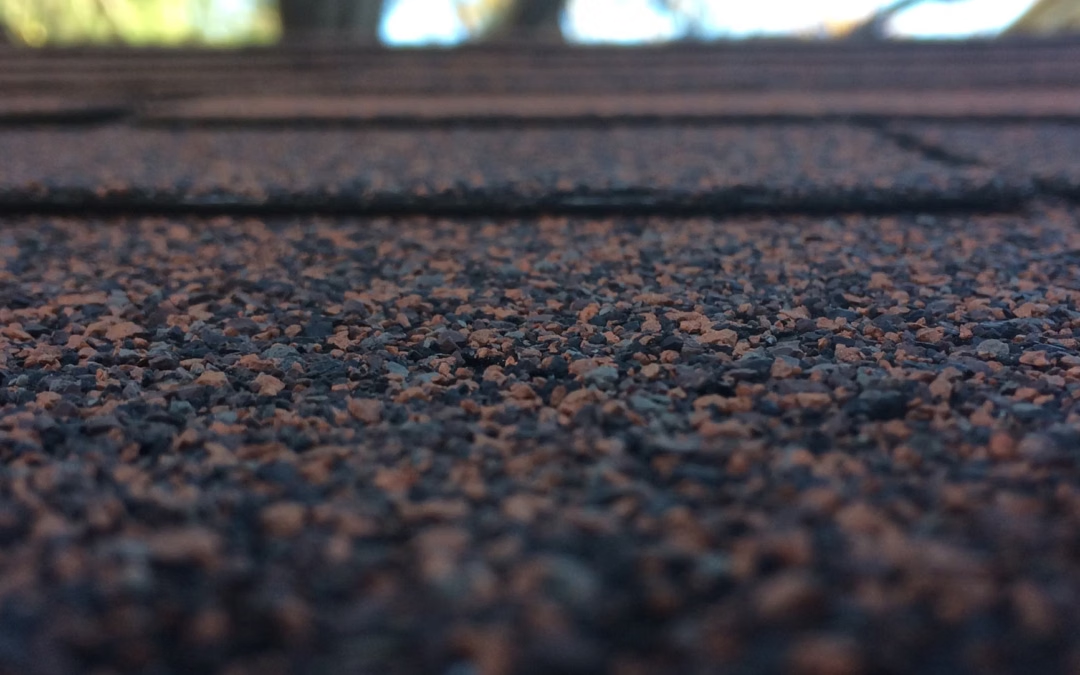
You notice it first from the driveway. A dark band that runs down the roof, usually on the back side or the slope that never seems to dry out. After a fall rain it looks worse, like somebody dragged a charcoal rag from the ridge to the gutter. You can hit it with a hose and it does nothing. Then you start seeing it in lines, following the shingle pattern, and you wonder if the shingles are failing.
Around here, November weather does that. Days still warm up, nights cool down, and that swing leaves dew sitting on shaded roof planes longer than you think. Add a couple of oak limbs hanging over the roof and gutters that hold water after a storm, and you have the perfect setup for black streaks that are not dirt at all.
If you’re seeing black streaks on roof Olive Branch MS, it’s worth looking at what’s feeding it and what else it’s telling you about the roof.
Those black streaks are usually algae, and fall makes it spread
The most common cause of black streaks is algae, typically the type that shows up as dark staining on asphalt shingles. It likes moisture that hangs around. Fall is prime time because we get humid afternoons, cooler nights, and long dew periods on the north and shaded slopes. A roof plane that stays damp until 11 a.m. will grow staining faster than one that dries by 8 a.m.
You’ll usually see it start near the ridge and run downward in streaks. That’s not random. Water sheds off the ridge, catches on the shingle texture, then carries spores and staining down the face. On architectural shingles, the shadow lines can make it look like the shingle itself is darker in bands.
This is not the same thing as normal granule shading or factory color blend. Algae sits on the surface. If you rub a wet finger across it and it smears a little, that’s a clue.
We also pay attention to how fast it showed up. If staining appeared within 2 to 3 seasons after a replacement, that points to shade, dew time, and gutter overflow more than “bad shingles.”
Shaded roof planes and north slopes stay wet longer, so growth follows a pattern
Growth patterns tell us more than people think. In North Mississippi, a north-facing slope can hold moisture hours longer than the south slope, especially in November when the sun angle is lower. If one side is clean and the other side has streaks, the roof isn’t “dirty,” it’s staying wet.
Shade is the big driver. A roof under a tree canopy gets less drying wind and less sun. Leaves also drop into valleys and behind chimneys. They act like a sponge, holding water against the shingle surface. Give that a few wet-dry cycles and you’ll see staining start at the top of a valley, around dormer sidewalls, or on the slope under an overhanging limb.
Moss is a different look. It’s thicker, green to brown, and it builds at shingle butts where water slows down. Once moss gets established, it can lift shingle edges and hold water under the tabs. That’s when it stops being cosmetic and starts shortening the roof’s service life.
If you’re seeing black streaks concentrated on one plane, we look at tree cover, attic ventilation balance, and how water exits the roof, not just the shingle surface. (If you want the deeper version of that, read attic moisture in Olive Branch is usually a ventilation problem.)
Why pressure washing and chlorine mixes can shorten shingle life
A lot of roofs get damaged by “cleaning.” Asphalt shingles are a fiberglass mat with asphalt and granules. The granules are the wear layer. High pressure takes them off. You may not notice it from the ground, but on the roof you’ll see exposed asphalt and a gritty pile at the downspouts. (Granules in your gutters after fall rain is one of the first things we look for.)
Chlorine-heavy mixes are another issue. Strong bleach can discolor shingles and it can cook nearby materials. It also runs into gutters and down onto landscaping. If there’s any exposed fasteners, painted metal, or aluminum drip edge, harsh chemicals can accelerate corrosion, especially where water sits.
If cleaning is on the table, we handle it like a roof, not like a driveway. Low pressure only. Controlled application. Protect plants. Rinse gutters. We also pick the day. You don’t do this late in the afternoon in November when the roof will stay damp all night. That’s how you end up with slick shingles the next morning and more growth later.
The bigger point is this: if algae keeps coming back, the roof is staying wet too long. Cleaning without fixing the moisture pattern is a loop.
During a replacement assessment, we check granule loss, decking, and soft spots
Black streaks don’t automatically mean you need a replacement, but they give us a reason to look closer. When we assess a roof for replacement, we’re not just looking at color and staining. We’re looking for wear and for what’s going on underneath. (That’s the same approach we take on a proper roof inspection.)
Granule loss is one. We check the gutters, the lower ends of downspouts, and the splash areas. A little granule shed is normal on a newer roof. Heavy granules mixed with asphalt “flakes” usually points to shingles that are aging out or shingles that have been cleaned too aggressively.
Decking condition is next. Most homes around here have 7/16 inch OSB or 1/2 inch plywood roof decking. We walk it and feel for soft spots. Soft decking around a bathroom fan termination, a plumbing vent, or a valley tells us water has been getting in, even if you don’t see a ceiling stain yet. If you’ve had trouble around that area, why your bathroom fan vent starts leaking in Olive Branch each fall is worth a read.
We also check penetrations and flashings. Pipe boots crack. Step flashing gets bent. Counterflashing gets loose. If staining is heaviest below a penetration, that’s a clue that water is washing that area more often.
Gutter discharge points and overflow feed streaks and moss in the same spots
Where the water goes matters. A lot of algae and moss problems line up with gutter issues, not because gutters “cause” algae, but because they keep the roof edge wet.
Here’s what we see a lot: a gutter that holds water because it is back-pitched, or a downspout that dumps right next to a foundation because the extension is missing. During a hard rain, gutters overflow at the same low spot every time. That overflow wets the fascia, wets the shingle edge, and keeps the bottom course damp. If you’re already seeing damage at the edge, soffit and fascia rot around Olive Branch rooflines ties right into this.
Valleys are another spot. If a valley is carrying heavy flow, any debris that slows drainage will keep water sitting. On a closed-cut valley, that means water is running across shingle faces more than it should. On a metal valley (often 24-gauge painted steel), debris can trap moisture against the metal and the shingle edge.
We also look at discharge from upper roofs onto lower roofs. If a higher gutter dumps onto a lower slope without a proper downspout tie-in, you’ll get concentrated staining and faster wear right below that point.
Gutter repair is sometimes the most direct way to slow down black streaks returning after cleaning.
What algae and moss can hide: nail pops, lifted edges, and small leaks
Staining can cover up early warning signs. Once a shingle surface is dark, you don’t see the subtle stuff as easily from the ground.
Nail pops are a big one. A nail that backs out 1/8 inch can lift a shingle edge, break the seal strip, and let wind-driven rain push uphill. In fall storms, we see gusts that hit the underside of a loose edge and peel it just enough to make a path for water. If you’ve had wind recently, nail pops and shingle blow offs after Olive Branch wind covers what we see most.
Moss can do similar damage. It grows at the shingle butt, then it swells when wet. Over time it can hold the shingle edge up. That creates a dirt line, then a water line, then rot risk.
If water gets past shingles, it hits underlayment. On many older roofs that’s 15-pound felt. On newer work it’s usually a synthetic underlayment. Either way, underlayment is the backup, not the roof. Once water gets to decking, it can swell OSB, loosen fasteners, and show up later as a ceiling spot. (If that sounds familiar, why your ceiling stain shows up days after a fall storm in Olive Branch explains the timing.)
If you already have a ceiling stain, that’s where sheetrock repair and painting end up tied to roofing work. We want the leak path solved first, then we patch and paint so it stays fixed.
What we recommend this fall: trim, ventilation checks, and timing repairs before cold nights
November is a good time to get ahead of this, because cold nights change how roofs behave. Seal strips on asphalt shingles do not bond as well once daytime highs drop, and repairs that rely on shingles resealing can take longer. (We get into that here: why shingles don’t reseal after October storms in Olive Branch.)
We like to start with the simple things that change moisture time on the roof.
- Trim back limbs so you’ve got air movement over the shingles and less leaf drop into valleys. A few feet of clearance makes a difference. (Fall leaves are hard on roofs in Olive Branch lays out what we see every year.)
- Clean valleys and gutters so water exits fast. Pay attention to the downspout outlets. If they’re clogged, the gutter stays full.
- Check attic ventilation for balance. A common setup is continuous soffit intake with a ridge vent exhaust. If soffits are blocked by insulation, the roof deck stays warmer and damper, which feeds growth.
If storm damage is part of the story, we document it while the marks are fresh. Wind creases, missing tabs, and lifted edges are easier to see before more rain and leaf litter cover them.
For homeowners in Olive Branch MS, this is also the season where small issues become winter leaks. We’d rather tighten up flashings, gutters, and ventilation now than chase stains on sheetrock later. (Olive Branch roofs before winter: the small problems that turn into leaks is the checklist we use.)
Key Takeaways
- Black streaks are usually algae staining on asphalt shingles, and fall dew on shaded slopes makes it spread faster.
- North-facing and tree-shaded roof planes stay damp longer, so staining shows up there first and in clear runoff lines.
- High-pressure washing strips granules, and harsh bleach mixes can damage shingles, metal edges, and gutters.
- During a replacement assessment we check granule loss at downspouts, walk for soft decking (often 7/16 inch OSB), and inspect flashings at penetrations.
- Overflowing or back-pitched gutters and concentrated discharge points keep roof edges wet and feed moss in the same locations.
Conclusion
Black streaks are a moisture story more than a “dirty roof” story. If the roof stays wet half the morning, algae and moss will keep coming back, and they’ll do their best work on the shaded planes you don’t look at much.
Our advice is to treat it like a system. Get the water moving off the roof cleanly, get the gutters draining, get the airflow in the attic doing what it should. Then decide if cleaning makes sense, or if the roof is already worn enough that you’re better off planning a replacement and fixing the details that caused the staining in the first place.
If you want us to take a look, we’ll walk it, check the decking and flashings, and tell you what’s surface-level and what isn’t. You can reach us through our contact page.
External references: Algae staining and cleaning guidance varies by manufacturer, and ventilation basics are spelled out in code and energy programs. See GAF roof algae and stain resources, Owens Corning roofing basics, International Residential Code (IRC), and ENERGY STAR roofing.